
More than twenty years ago, I clipped into my skis at SilverStar Mountain Resort for the first time. It was my first introduction to Canadian skiing, and like many first loves, it set a benchmark that’s hard to shake.
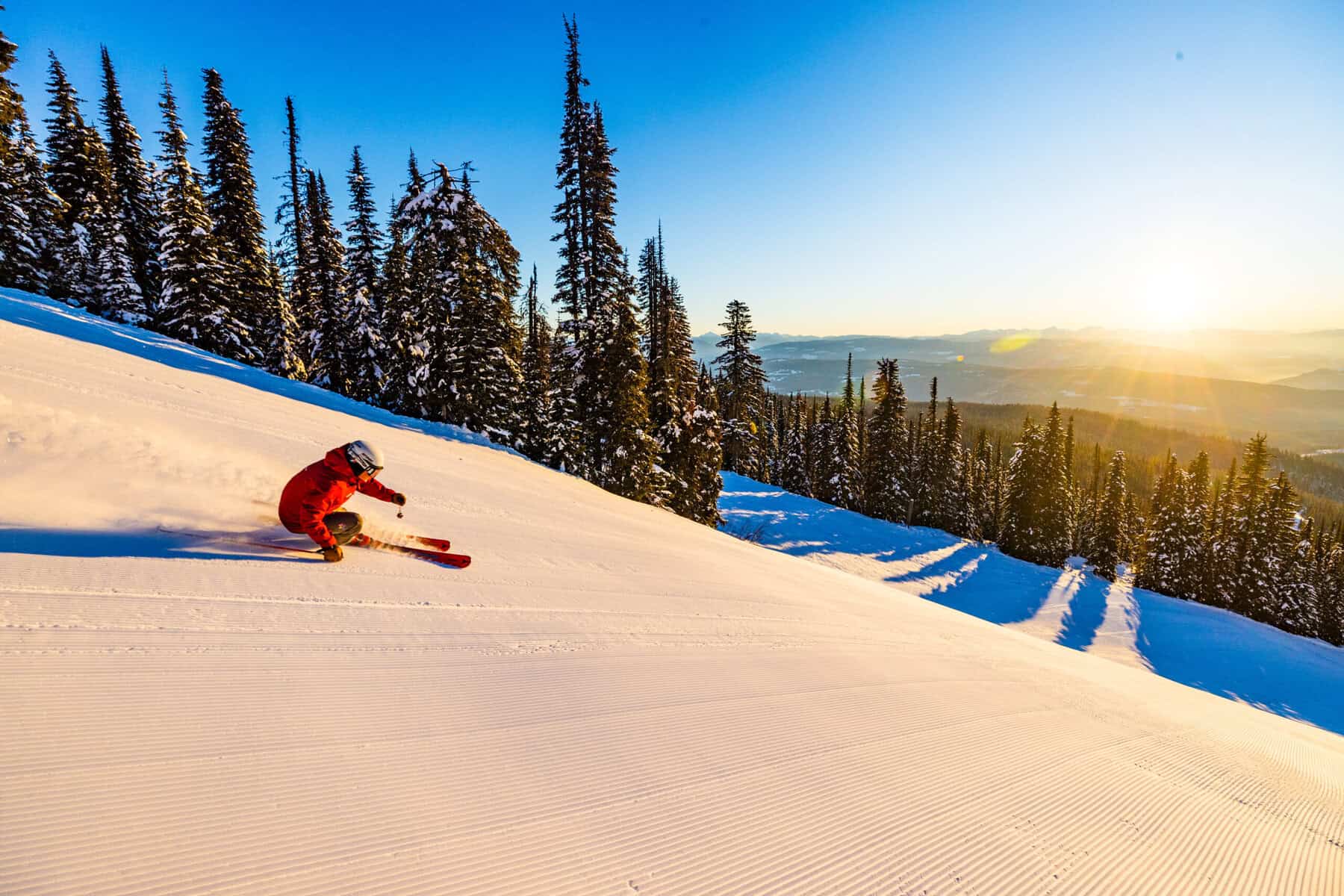
What struck me wasn’t the acreage on a trail map, the touted deep powder, vertical feet or double black runs, but simply the feeling of it, how it made me feel. Wide fall lines, perfectly groomed runs, playful tree-lined areas, and the fairy-like snow crystals that hung in the air on a cool, crisp morning. Surrounded by mountains and towering pines, it often felt like you were there alone. Add to that a picturesque village you could ski straight into at the end of the day. Coming back now, for our third visit, I was curious to see whether memory had been generous.
It hadn’t…SilverStar sits above Vernon in British Columbia’s Okanagan Valley, about 45 minutes from Kelowna Airport. With 3,304 acres spread across four distinct mountain faces and more than 133 named runs, it’s one of the largest ski areas in the province. Those numbers matter less than how the terrain is laid out. Rather than stacking steep vertical in one long fall line, the mountain spreads laterally. Skiers disperse naturally across pods of terrain, which means even on busier days lift lines are reasonable and runs feel uncrowded.
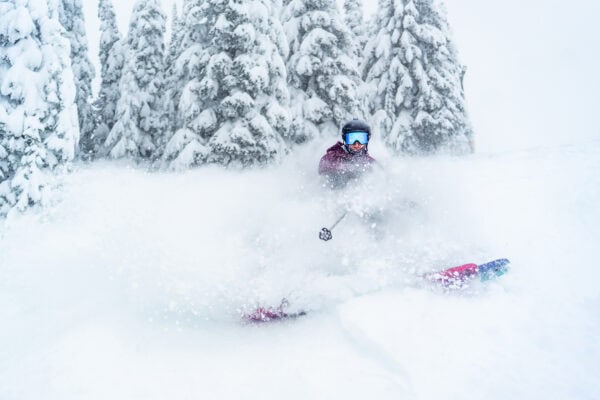
Our first morning back delivered classic interior conditions: low cloud, flat light and a few centimetres of fresh snow overnight. It takes a while for anyone in New Zealand to trust the snow. If we see lumps in NZ the chances are they’re frozen blocks of binding-popping ice, and in low light you often have no idea where you’re heading. In Canada the hazards are fewer and farther between, and you slowly develop a relationship of trust with the snow.
We joined a complimentary mountain host to get reacquainted and to show two first-timers in our group how the faces connect. SilverStar’s layout rewards movement and travel. Instead of standing over a trail map, we skied from zone to zone, learning how one ridge feeds naturally into the next.
There are a few trails and traverses needed to get to certain places on the mountain. Some of the tracks are long, but they’re there for a reason. Like a spider’s web stretching across the mountain, they move you from one special section to another. Each zone seems to develop its own weather pattern, snowfall and character. If you get bored or the snow starts to soften, simply move across the mountain and you’ll often find exactly what you’re looking for.
The South Face is the mountain’s backbone. Long, consistent groomed runs roll from summit to village with a moderate pitch that encourages speed without forcing it. You can lap confidently, dial in your turns and build momentum over the course of a morning.
Your only real enemy is fitness. You can move consistently from one run to the next, with chairlifts appearing like long-lost friends, not just to get you around the mountain, but to give your legs a break. Unlike in New Zealand, where crowded slopes often mean waiting for someone to clear a line or pause while a narrow section opens, here the runs feel open and uninterrupted. Often the only pause comes at the lift itself, greeted by the smiling face of the lifty and the reassuring drop of the safety bar.
For intermediates, it’s progression-friendly terrain. For stronger skiers, firm days mean high-speed carving; soft days mean playful lines along the edges.
When the cloud lifted, the Okanagan opened up around us and we began to explore further. Attridge and Silver Woods offer a different flavour, more sheltered and more intimate. After fresh snowfall, the terrain holds snow well thanks to predominantly treed slopes and the region’s light, dry interior powder.
When people think of tree skiing they often picture the drama seen on YouTube. In reality it’s rarely like that. It’s not extreme, it’s engaging. Natural rolls, banks and varied spacing between trees turn sections into something that feels less like piste skiing and more like a flowing line through features. It reminded me more of a skate park or mountain bike trail, with berms that hold your speed and dips that keep things entertaining. In fact, many of these tree runs are mountain bike trails in summer. At times it genuinely felt like we had our own private terrain park, built by nature.
For Kiwi skiers used to wide open alpine terrain, skiing through trees takes a little adjustment. At home the slopes are mostly clear, but here the forests shape the run, and you find yourself picking lines between trunks rather than simply following the fall line. SilverStar is a great place to get comfortable with it. The trees are well spaced, the terrain forgiving, and it quickly becomes one of the most enjoyable ways to explore the mountain.
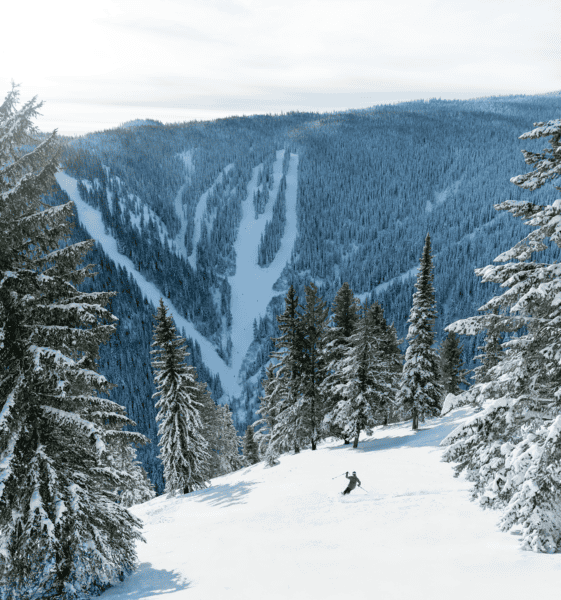
On the North Face, known locally as Putnam Creek or the Dark Side, the tone shifts again. It’s shadier, steeper in places, and feels more removed. On our first visit two decades ago, we skied it on opening day with a local legend named Norm, who led us into untouched powder, the kind of memory that burns itself into your skiing psyche. This time conditions were firmer, but the variety remained: accessible greens and blues that allow mixed-ability groups to explore the zone, alongside steeper lines that remind you the mountain still has teeth when you want them.
What continues to stand out is how well SilverStar handles groups. Terrain funnels back toward common lift hubs, so splitting up is easy and regrouping is even easier. Over the week our mixed-ability crew found a natural rhythm: ski together, peel off, meet again for a longer lap.
Snow reliability is another quiet strength. SilverStar benefits from interior British Columbia’s colder, drier snowpack, and with much of the terrain protected by trees, wind impact is reduced. Even after a light overnight refresh, surfaces held their shape well through the day. Coverage felt consistent across aspects, and grooming kept the runs in excellent shape.
Off the slopes, while still taking advantage of the alpine terrain, the mountain broadens its appeal. More than 50 kilometres of Nordic trails wind through forest and open terrain, and the same lift pass covers fat biking, tubing and outdoor skating. It’s a genuine multi-discipline setup rather than a token add-on. For families or mixed-interest groups, that flexibility adds real value.
At the end of a day skiing we often wandered down to the skating area, a frozen lake where you could hire skates and watch families glide across the ice. Younger kids shuffled around the edges while older ones flicked a hockey puck back and forth in the fading light. The only interruption to this peaceful scene was the hooting and cheering drifting across from the tubing hill just 50 metres away, another way to enjoy the end of a ski day.
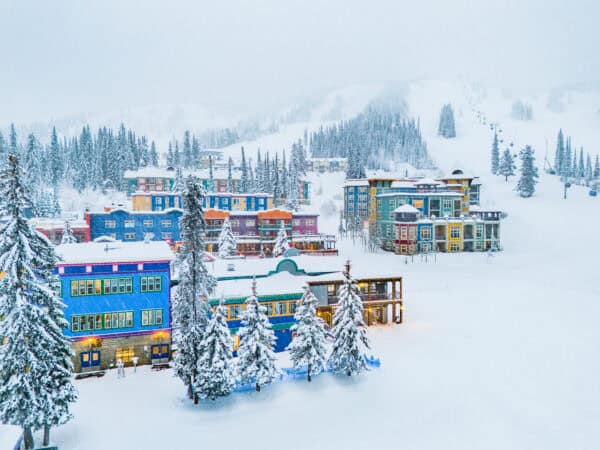
And then there’s what SilverStar is famous for: its village. Compact, ski-in ski-out accommodation lines brightly painted wooden facades that feel almost storybook-like. It’s designed for ease, but it’s also undeniably charming. At night sparkling lights appear everywhere, while during the day the colourful buildings complement the alpine backdrop.
You slide to the door, step inside for coffee, or something stronger, and wander back out with ease. Staying slope-side meant our evenings often ended in a hot tub, steam rising into the cold air as we replayed the day’s best turns and worst decisions.
After two decades between visits, what struck me most wasn’t how much SilverStar had changed, but how well it had held onto its identity. It delivers a balanced mix of terrain, reliable snow, efficient lift infrastructure, and a village that supports the skiing rather than competing with it. Every visit reminds me why this mountain holds a special place in my heart.