

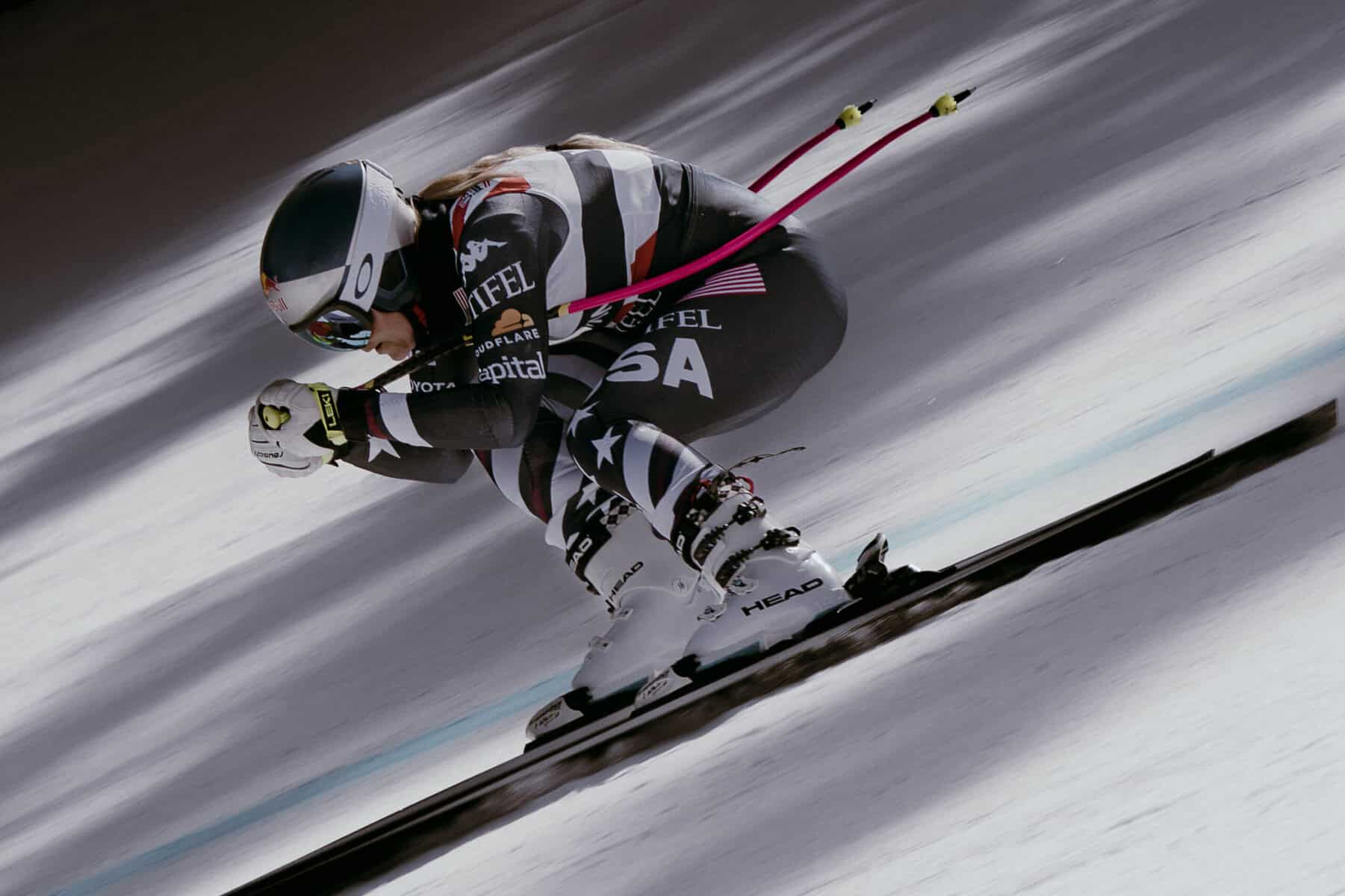
Lindsey Vonn did not ease her way back into the alpine skiing season. She announced herself with authority.
On Friday morning in St Moritz the American delivered one of the most emphatic downhill wins seen in recent seasons. Vonn won the opening FIS World Cup downhill of 2025 by 0.98 seconds. In elite speed skiing that margin is not just convincing. It is a statement.
At 41 years old Vonn did more than win a race. She became the oldest alpine skiing World Cup winner in history and reignited serious conversation around her gold medal ambitions on the biggest winter stage next year.
A return that demanded attention
Vonn arrived back on the World Cup circuit last season after a long absence. The goal was not nostalgia. It was competition. She wanted to line up against the current benchmark of downhill skiing including Italy’s Sofia Goggia and Austria’s deep speed team.
Her intent was obvious early in the week. In the first downhill training run on Wednesday Vonn was fastest by 0.59 seconds. The message was clear. She was not here to make up numbers.
Pressure built before she even left the start gate
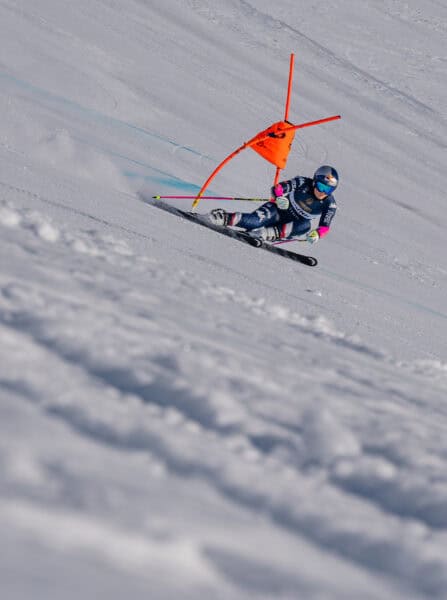
Friday’s race unfolded with tension. Vonn was the sixteenth starter and had to watch 15 rivals throw everything at the St Moritz course before her turn came.
German rising star Emma Aicher briefly held the lead before Austrian Mirjam Puchner went faster. When Goggia launched she looked aggressive and precise but still came up short finishing 0.15 seconds behind Puchner.
The course was holding speed and the bar was high.
Vonn’s run was measured then ruthless
Vonn did not explode out of the gate. At the second intermediate she was only seventh. It was the kind of split that raises eyebrows rather than cheers.
Then the run opened up.
She carried speed through the third check and moved into the lead before unleashing a powerful bottom section. Her lines were clean. Her skiing calm. She crossed the line 1.16 seconds clear of Puchner.
Later Austrian Magdalena Egger slotted into second place but still finished 0.98 seconds behind Vonn.
No one else came close.
Records rewritten at 41
The victory was Vonn’s 83rd World Cup win and her first since March 2018. More significantly it made her the oldest winner in alpine World Cup history. She surpassed the mark set by Swiss great Didier Cuche who last won aged 37.
Age was not the story on Friday. Speed was.
After the race Vonn summed it up with understated confidence.
“I knew I was skiing fast but you never know until the first race. I think I was a little faster than I expected. It felt so good. I don’t have to drive at the limit and I’m still fast and driving cleanly.”
That line alone will have the downhill field paying attention.
A calculated build toward the Games
With a second downhill scheduled at St Moritz the momentum continues immediately. Beyond that Vonn is clear about her plan. The World Cup season is her proving ground and her preparation phase.
Across her career she has already claimed one downhill gold one downhill bronze and one Super G bronze on the Olympic stage. What this season represents is a chance to add to that legacy with experience rather than youthful recklessness.
Why skiing still matters to her
Fresh off a US Ski Team training camp in Colorado Vonn spoke candidly about why she still races.
“What I love most is the feeling that anything is possible. You can ski as fast as you push yourself. It feels limitless.”
That sense of possibility has always defined her career.
Strength built on work not talent alone
Asked what sets her apart Vonn pointed straight to discipline.
“My biggest strength is my work ethic. No matter what is in front of me I will keep working as hard or as long as it takes to get where I want to go. That matters more than anything.”
It is not a glamorous answer but it explains longevity better than any highlight reel.
Managing risk at extreme speed
Downhill skiing is never safe and Vonn does not pretend otherwise.
“Planning and preparation are how you manage risk. Knowing the course being strong being mentally ready gives you the best chance. But at 85 miles per hour anything can happen. It is a dangerous sport.”
It is a reminder that every run is a calculated gamble even for the most experienced athlete on the circuit.
Why the Games still mean more
With the next Winter Games fast approaching Vonn is clear on why they sit above everything else.
“You are representing your country. It is bigger than a World Cup or World Championships. It is a privilege.”
That sense of responsibility has not faded with time.
The message behind the comeback
For those watching her return unfold Vonn hopes the takeaway goes beyond medals.
“I hope people believe in themselves. This comeback was unexpected. I am changing expectations about what is possible at an older age. I hope people chase their own dreams because of it.”
Based on what unfolded in St Moritz the sport itself might need to reset its expectations too.